
Build a task-specific state
Link scene, gaze, device state, stimulation history, feedback, and relevant context.
MedTech · Digital Health · AI Safety
AVCR is a history-, geometry-, intervention-, and uncertainty-aware software control layer designed to decide when to act, when to abstain, and what evidence must be preserved before stimulation.
The problem
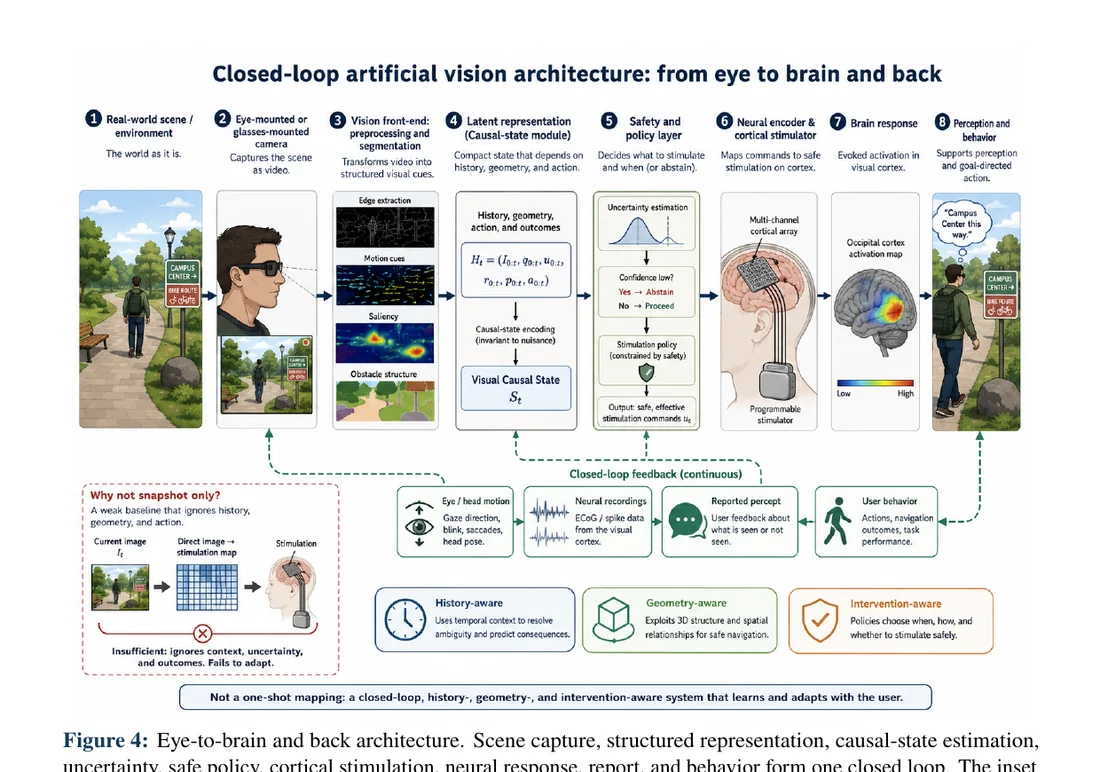
Useful artificial vision is a closed-loop control problem. Perception can depend on the person, gaze, recent stimulation, cortical geometry, device state, and task. A static camera-to-stimulation map can erase history that changes the next percept.
Link scene, gaze, device state, stimulation history, feedback, and relevant context.
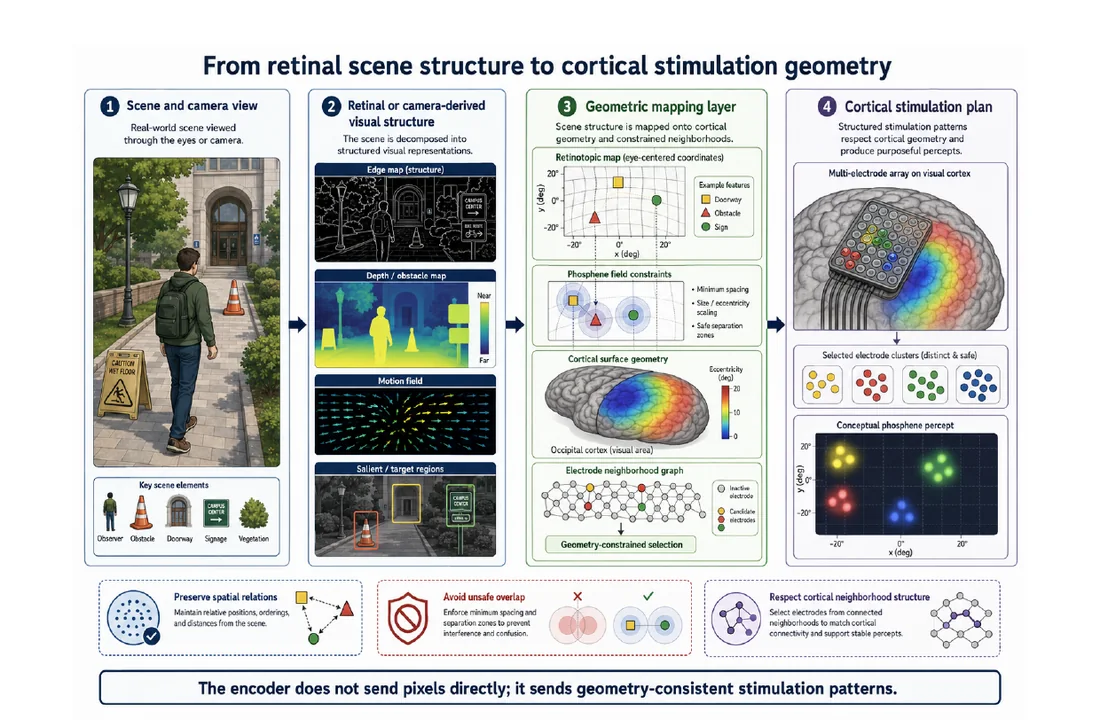
Preserve local structure and support remapping when gaze, maps, or interfaces change.
Use uncertainty and response-diameter gates to determine act, limit, wait, or abstain.
Connect software decisions to hardware-in-the-loop logs, provenance, and safety tests.
Current stage
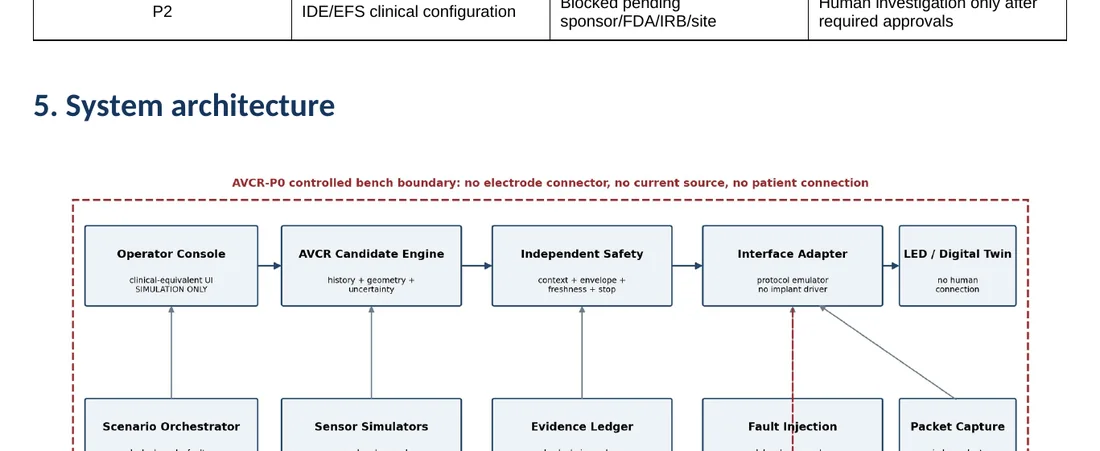
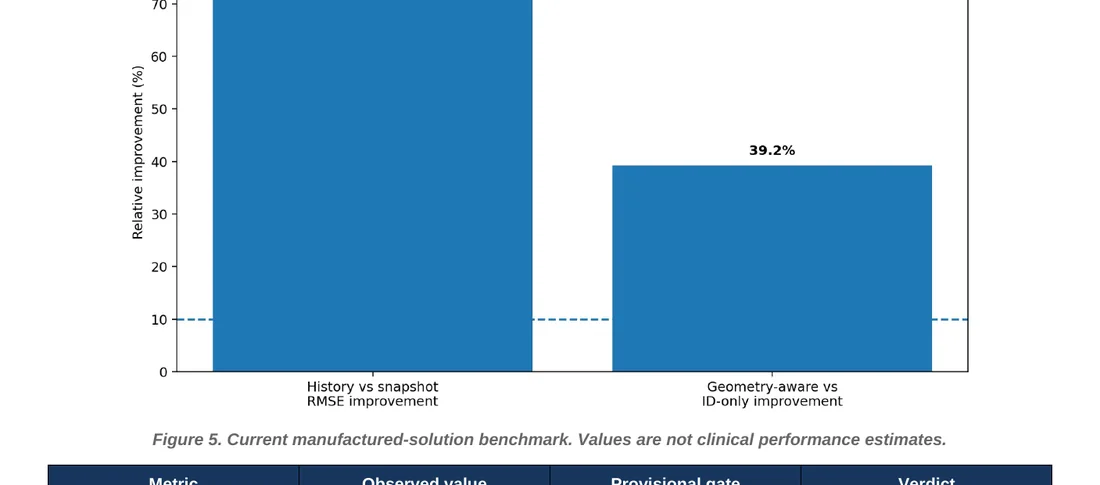
AVCR’s current physical prototype is designed for non-human, non-stimulating hardware-in-the-loop verification. It does not include an electrode connector, implantable current source, patient connection, or clinical-use authority.
Abu Dhabi roadmap
Anahita intends to establish Abu Dhabi as AVCR’s MENA engineering, validation, and commercialization base, with one founder relocating long-term if selected by Hub71+ Life Sciences.
Month 1
Set up the operating structure, relocate a founder, complete the IP and regulatory data room, and map clinical, regulatory, investment, and device partners.
Month 2
Complete independently witnessed HIL testing for timing, watchdog, E-stop, power recovery, fault injection, logging, cybersecurity scope, and abstention behavior.
Month 3
Secure a scientific or clinical collaboration pathway, finalize UAE and FDA regulatory roadmaps, recruit priority advisors, and prepare the next financing round.
About Anahita
Anahita is developing AVCR at the intersection of neurotechnology, control theory, medical-device software, evidence architecture, and patient-specific adaptation.
The programme is led by Esmaeil Farshi, founder, inventor, and author of the AVCR scientific framework.
AVCR